Tuesday, January 26, 2010

Getting Active in Arad


On Monday the 11th, Garin Tzedek held its first "Sports Club" night for the Sudanese youth in the Arad community.  Roughly 15 or so kids of varying ages showed up to play a rousing game of soccer:


We hope to continue the club in the coming weeks, offering the kids opportunities to bond with each other and just have a good time.  Unfortunately, the past two Mondays, the club has not met due to poor weather conditions in Arad, but we're looking forward to reconvening next week.

Garin Tzedek has also continued to be very active with extra activities within the Year Course community.  On Tuesday the 12th, Year Course chanichim arrived at the Alon School to participate in "The Dating Game."  As usual, a good time was had by all, and two lucky contestants found their true loves.  The following Tuesday, Garin Tzedek hosted a relaxing night at the Jewish Agency center in Arad consisting of meditation, yoga, and "boundary breakers" designed to bring everyone closer together.  The evening was very enlightening and low-key.

In the meantime, Garin Tzedek has still been conducting English classes for both Sudanese children and adults every Sunday and Tuesday night.  Other exciting projects are still in the works for the Garin in Arad, so look forward to more updates soon!

Sunday, January 24, 2010

JPost: Israel is looking to adopt orphans from Haiti

From the Jerusalem Post Website:

Israel is looking into adopting Haitians orphaned by the January 12 earthquake, Minister of Welfare and Social Services Isaac Herzog told The Jerusalem Post on Saturday.


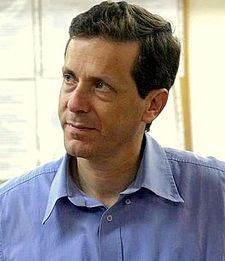
Welfare and Social Services Minister Isaac Herzog.

"We see this as part of Israel's humanitarian outreach," Herzog said, referring to the IDF medical operation and the Israeli rescue efforts in the Caribbean nation.

"Haiti was one of the countries that supported us on November 29, 1947, [in the UN vote on the establishment of the state], and now it's our turn to support them," he said.

Representatives of the Foreign and Welfare ministries held an emergency meeting on Thursday to discuss the fine details of possible adoptions. The Welfare Ministry's Child Welfare Services division is responsible for overseeing all international adoptions in Israel.

While Israel already has agreements with several countries such as China and Russia on the procedure for international adoptions, with nearly 200 children per year adopted, no such protocol exists with Haiti, Herzog said.

He added that Israel's ambassador to the neighboring Dominican Republic, Amos Radian, had already started looking into reaching an agreement with Haitian authorities to begin adoptions as soon as possible.

"We first need an agreement with the country's government," explained Herzog. "However, with all the chaos in Haiti, this could take a while."

He said Israel would work with local charities operating in the disaster zone to identify children who need adopting and highlighted that families in Israel had already come forward offering to adopt Haitian children.

On Friday, UNICEF warned that the possibility of child trafficking following the earthquake had become a significant concern. Many children separated from parents have become vulnerable to trafficking and sexual exploitation, it said.

In Israel, families who adopt children from abroad receive €22,000 ($31,097) from the state to help cover the high international adoption fees. Herzog said that all children adopted from Haiti would undergo the standard conversion process to Judaism.

-----------------------------------------------------------------------------------

Israel is taking the moral initiative once again. We had the fastest and best run field hospital in the Haiti relief effort and are even going the extra step to be a light unto the nations. Hopefully this example can be followed with the Israeli response to the Sudanese community as well.

Sunday, January 10, 2010

A Busy Week Back!

Garin Tzedek in Arad has had an engaging week after returning from Year Course's winter break.

On Sunday, an Arad local named Eli Klain came around to the Sudanese ganim in the area and donated bags of bamba to the children.  Eli hopes that this will become a weekly occurrence, and both Garin Tzedek and the Sudanese community in Arad greatly appreciate his contribution.


Then, on Monday, the ganim received another generous donation of stuffed animals from Judith Levitsky, the mother of Garin Tzedek member Simon Levitsky.  The children were completely enamored with the toys, and will enjoy them for many years to come.  Again, everyone (especially the kids!) are very grateful for these great gifts.


Tuesday was a very busy day.  Garin Tzedek members went and taught the first of many English lessons to Sudanese children.  On the first day, we administered a placement test in order to better facilitate teaching.  This way, students of equal skill levels can be placed into smaller groups and be taught more effectively.  Although the students were rowdy, they were eager to learn and do their best on the test:


Then, almost immediately following the lesson, Garin Tzedek hosted its second Garin Tzedek Night at the Alon School.  The aim of Garin Tzedek Nights in Arad is to bring the Year Course Section 2 community closer together and provide opportunities for all Year Course participants to enjoy fun, extra activities.  This past Tuesday we hosted "Fear Pong," a version of Beer Pong using water instead of beer.  In Fear Pong, 4 teams take turns shooting on the cups of the team opposite them.  If a team makes a cup, they call out a person on the other team to drink the water in it and complete its dare.  It was a fun night for everyone who came, with lots of hydration and plenty of ridiculous dares being done:


We can only hope that the coming weeks will be just as productive and enjoyable!  The Arad section of Garin Tzedek has several big projects in the works, so look forward to more exciting updates in the near future.  If you'd like to make a donation of any kind, we are currently having an "everything drive" for the Sudanese community.  Monetary donations are, of course, also accepted--any money you donate could go towards giving Sudanese children in a gan toys, teaching both children and adults English, helping the Sudanese people acquire necessary health care, and many other needs.  We appreciate your continued support, and if you have any questions about Garin Tzedek in Arad, please feel free to send an e-mail to ittai.eres@gmail.com.

Thursday, January 7, 2010

Jerusalem Garin: Political Action

In Jerusalem there is no significant Sudanese community to speak of, so it has been hard for us to formulate major projects or initiatives. However, GT-Jerusalem has held a meeting to determine our programmatic focus for the section and is having a follow-up meeting in the coming days. Our first meeting highlighted the need to exploit Jerusalem's advantages as a cultural and academic center in the country to learn educate ourselves and others about not only the situation of the refugees in Israel, but also to take some political action in the Knesset's back yard. The following is a rough draft of a letter that we will be getting signatures for in Jerusalem to send to United States Representative (and YJ parent) Shelley Berkley of Nevada calling for action to aide Israel in helping the Sudanese refugees here.

Dear Congresswomen Berkley,

As you well know Sudan and Darfur have been conflict areas of increasing global interest in recent years. However the current violence in the region outdates the media coverage and spans back more than twenty years. The political, religious, ethnic, and tribal tensions that have caused the ongoing humanitarian crisis between the Arab North and Black South and West of Sudan stem back to the late ‘80s. Millions have died as a result of the fighting, raiding, slave trading, burning, raping, harassment, and starvation. Since 2005 there has been a truce and some progress towards an ultimate peace, but millions of displaced persons from Sudan are still dispersed throughout the globe, including in Israel.

Israel has an outstanding record on human rights, despite being on the frontlines of the war on terror and repeated slander by some media outlets. Israel has many faults, this we know, but there is also much to be proud of. Israel does not allow torture. Israel gives its citizens and press full liberty to criticize the government. One third of all Israeli young adults volunteer for one of the hundreds of Human Rights related organizations in Israel. Many Israeli youth take a year before their mandatory army service known as a שנת שרות, Shnat Shirut, or “year of service” in the literal translation to volunteer in underprivileged areas. The Israeli Supreme Court has made ruling after ruling in favor of human dignity, individual liberty, and respect of the interests of Jews, Muslims, Christians, and Seculars. In regards to the Sudanese refugees Israel has taken yet another stance on the side of justice by allowing them temporary and sometimes permanent refuge in the country. By contrast Egypt shoots at the same refugees when they attempt to cross their borders and Northern Sudan has killed hundreds of thousands of Dinka, Nuer, Nuba, Bari, Fur (Darfur), and numerous other tribes of Black-African Sudanese men, women, and children. By taking in this newest group of refugees Israel is following the same precedent set by Menachem Begin with the Boat People of Vietnam; the precedent set by David Ben Gurion when signing of the Law of Return and absorbing the millions of Holocaust survivors and refugees from Arab countries; and the precedent set by Yitzchak Shamir and Yitzchak Rabin in the case of Soviet and Ethiopian Jewry.

However, Israel’s actions have brought strain on its government and people that are hard to alleviate. Many of the refugees have settled in small, underprivileged communities on Israel’s periphery and have taken the jobs that native Israelis would normally have to sustain themselves. The Sudanese also do not always have proper medical or legal care and documentation and are difficult to set policy for as they are from an enemy country and could continue to arrive in larger and larger numbers if there is an incentive to do so. For this reason Israel’s government has had a cold reaction to the influx of refugees from Darfur and Southern Sudan characterized by begrudgingly given aid. While many Israeli volunteers have helped to provide education, health, and social services their help is not always enough.

I am signing this letter to you because I believe that the United States has a responsibility, as Israel’s closest ally to help with this humanitarian issue. You more than most others understand your moral obligation as a Jew, an American, a Social Servant, and a World Citizen to help these people however you can. I urge you to introduce legislation that provides Israel with either financial aid to deal with the refugees or proposes to transfer a large number of them to the United States, the Golden Medinah, where there are greater sources of funding to deal with their community issues. We said the we believed in good, we said that we will be a light unto the nations, we said, “Never again!” Please fulfill these prophecies.

B’Shalom U’vracha,

Todah Rabah

So Long Sean!

I am proud to announce that Garin Tzedek has recently elected to send Sean MacDonald to the US from February 8-16 for a week long whistle-stop tour including New York, Northern New Jersey, Boston, Houston, and Austin. Sean will be speaking to many groups including a group of Young Judaea alumni and the Young Judaea National Midwinter Convention body about the activities of the Garin in hopes of raising money to pay for our expanded program set and raise awareness about what we've been doing this year. Hopefully upon his return (of course to a full ticker-tape parade and beds of roses) Sean will have vastly expanded our network of friends and supporters in the States. Good luck Sean!

Wednesday, December 9, 2009

Adam Abdallah's Speech

Before Section II left Bat Yam, Adam, the English teacher at the Darfuri family center, passed along a speech he was about to give about the background of Darfur and his own personal story.  In the past several months, all of Garin Tzedek in Section II felt inspired by working with Adam, and it's only fitting that everyone should know why:

If you want to know what it feels like, ask a patient not a doctor. (Arabic Proverb)
My name`s Adam Abdallah and I belong to Fur tribe; the largest tribal group in Darfur.
Darfur ,which means the house of Fur, was named after the Fur tribe. It was a kingdom until 1916. It lies in the extreme west of Sudan. The Republic of Chad, Libya, and Central Africa are the neighbouring countries. The area of Darfur is approximately 196,404 sq miles and it occupies one fifth of the area of Sudan. It is larger than Egypt and it equals the area of France. So many tribes live there such as Fur, Masalit, Zagawa, Borno, Dajo, Arabs, etc..
There are some tribes intermixing with Chad, Libya, and Central Africa . Darfur Region has never been known to refuse people from outside Darfur. Thus it became an intermixture of different tribal and ethnic groups. These inhabitants, with all their different Arab and African roots, are 100% Muslims. This made the region more colourful.
Some experts describe the Darfur conflict as a tribal war, saying that it is just between the farmers and the cattle breeders. If it is just as they say, why is the government involved in that fight ?
Since I was a child, our parents in the village often told us not to leave the village while they were away for fear that we might be kidnapped. That was in early 1960s. In the country, it is quite usual that adults do not stay at home during the day. They either go to the farms or to the neighbouring villages for one reason or another. Children were kidnapped by the above mentioned nomads. Soon after that, it was in early1980s, another phenomenon emerged: Armed Robbery. People in military uniforms, from cap to boot, robbing on the roads, attacking and burning homes and villages, raping women and girls, even burning children alive, looting animals and killing these simple and traditional peasants in the cases of resistance. There was also a deliberate destruction of crops and cattle. Community leaders, merchants, teachers, and the most outstanding people were targeted. They have been detained, tortured, and killed. It`s been six years since the war started, and Darfurians have become either displaced or refugees in other countries. Despite the international demands to end the brutality, the government of Sudan and its Janjaweed continue restrictions on humanitarian assistance, attacking aid workers and expelling aid organizations. Diseases spread and the situation is totally worse.
My personal story:
I was born in a small village called Sulo.This village no longer exists. My father died when I was a primary school boy of 7. It was my mother alone who brought me and my seven sisters up. When I graduated from Khartoum University in 1988, I went back home to work as a teacher and support my family. I was appointed as a community leader. The same year, in november 1988, a war started between the Arabs and the other tribes in Darfur. On 25/11/1988 my village was attacked. It was early in the morning while we were fast asleep. The Arab miltia surrounded the village and set fire to the houses. Of course, houses in Darfur are huts. They`re made of grass and straws, so they are easy to burn. 154 people were killed and dozens of them were injured. My mother was killed that day and I was wounded. Others ran away to the mountains and other villages to seek protection. Everything was taken from the village: goats, sheep, camels, cows, horses, donkeys, all possessions and even hens. Farms were burnt. Nothing was left. In a couple of days the people of the village came back and rebuilt it. Some of the people are still missing. There were a lot of widows and orphans. The third and last attack was on 29 January 2004. It wasn`t only my village which was burnt this time, but also the other ones. The government did this systematically. All the villages in the region were burnt down to ground. I decided to leave Darfur. I set out for Khartoum, the capital of Sudan. I thought it would have been safer for me. As soon as I got there, I was empolyed as a teacher for high schools. But suddenly, the government began arresting Darfurians, imputing that these Darfurians supported Darfur rebel groups. I felt that my life was in danger. I fled to Egypt. I started my journey to Cairo on 8 March 2004. I got my travelling documents by bribing the police officer. I arrived in Cairo on 11 March 2004 and I immediately went to the United Nations High Commissioner for Refugees for protection. The date was set for the first instant interview: 25/7/2004. By 1/6/2004 the UN announced that there would be no more interviews for Sudanese claiming that Sudan and the Sudan People Liberation Movement /Army (a rebel movement in southern Sudan) have signed  peace agreement. But I made an appeal explaining that Darfurians have not been concerned with that peace accord. I stayed in Cairo for four years waiting for the first instant interview. Finally I decided to come to Israel. My wife and I and our two children started the journey from Cairo to Israel through El Arish. On 4/7/2007 we came to the Israeli Egyptian border. The journey took us four days. At the border we faced a very high barbed wire fence. I managed to climb it, but it was too hard for my wife and the children to climb. While I was trying to help them get in, the Egyptian troops arrived and caught them. They were taken to prison in El Arish. They stayed in prison for twenty five days. My wife was pregnant. She was tortured and she lost her baby due to that. Eventually she joined me. In conclusion, I would like to thank the government and the people of Israel for hosting us.

Despite Adam's warm regard for Israel, it's important to remember that the Darfurian refugees who arrive here are not necessarily treated well: many people in the society don't want them here, and the government often takes actions that impede their moving here, such as the IDF's previous policy of "Hot Return," which allowed border patrols to immediately return any Darfurians who have crossed the border within the last 24 hours and haven't gone farther than 50 kilometers into the country.  The government also makes moves against their staying here, such as the infamous "Gadera-Hadera Law," which prohibited African refugees and foreign workers from living in the central area bound by Gadera in the south and Hadera in the north, essentially blocking out Tel Aviv.  Thus it's clear that, while Darfurians have found a shelter in Israel, it is not necessarily a cooperative one.  Israeli society is very conflicted about the issue.

A Bittersweet Goodbye to Bat Yam

This past week Section II moved from Bat Yam to Arad. Last week we went to the center for the last time and said goodbye to our friends we have made in the Center. Adam was sad to see us go and really appreciated us coming for the past 2 months.Cera, Nathan, Ittai, and Emilie also had to say goodbye to the children's house and the families. It was sad.
Over the past 3 months Section II has done a lot in Bat Yam. We raised awareness by having a movie night with Adam's story as well as other Sudanese refugees highlighted in the film. Adam and Nick from ARDC also came to speak to us one Dessert and Discuss. We raised a lot of money from the Shabbat Dinner and selling snacks in between classes every day and attending the fundraiser at the Dancing Camel. And we hopefully made a difference, even if it was only a small one, in the lives of the Southern Tel Aviv Darfuri community. Section II Garin Tzedek also had a couple events to build kehila such as Rikud Night and a Tiyul.

Now we are in Arad and there is a lot of potential here. Currently we have Ittai and Laura working in Ganim, and David working in construction for their volunteering. Cera and Emilie are going to do social work for the Sudanese and work with the families trying to help them with specifics needs. Also the Business Track hopped on the Garin Tzedek train by making their business project in Arad helping Sudanese set up a business for themselves. At this moment it is projected that the Business Track will help them set up a coffee shop, so they can help employ themselves and gain some entrepreneurship.

Altough as a section we are sad to leave Bat Yam, Arad is full of great opportunities for the Garin and we are already on the path to taking advantage of them.